Newsies

This slideshow requires JavaScript.

I changed the nameplate at top. They are newsboys from the early 20th century – newsies. You may have seen the play or movie “Newsies,” which is about the newsboy strike of 1899.

In the late 19th and early 20th Centuries, newsboys sold newspapers on the streets of New York. They worked grueling hours and didn’t make much, many were homeless.

In 1899, Joseph Pulitzer who owned the New York World and William Randolph Hearst, who owned the New York Evening Journal, raised the amount of money they newsboys paid for the newspapers.

In 1898, due to the Spanish-American War, newspapers sold a lot of issues, this was the only means of news and people bought them up, wanting to know the daily status of the war. Newspapers raised the price from 50 cents to 60 cents per bundle of 100 newspapers. After the war, all newspapers dropped the prices back down, except for the World and Evening Journal.

I looked up the newspaper front pages from back then, you can see them here. They were one cent. So the 60 cents per bundle of 100, really didn’t leave much of a profit. You can read about the strike and get details here. The main outcome is still used to this day – the newspapers will buy back unsold copies of the papers. So if the papers don’t sell, the news seller is not responsible for them.

Graphic design in the ‘old days’

A few friends shared this video on Facebook. It shows what graphic design was like before Adobe Illustrator was around. I remember the press down letters, but this wasn’t that long ago, was it? They make it sound like ancient history.

I remember using the letters for a bag company I worked for, I think I told the story before, I used to do the graphics for a paper bag company. At times I didn’t have the typeface I needed on our Compugraphic or Varityper machines so I would purchase the type on sheets and press them onto the graphic I was working on.

waxer

Compugraphic and Varityper, I haven’t thought of those names for years. They were huge machines where type came out sort of on reverse film, black on white. Then we waxed the back using a “waxer.” There was a machine with a roller, called a “waxer,” and it waxed the back of the film and it then was placed down where needed. And of course xacto knives and razor blades were in our hands at every moment. I preferred razor blades to xacto knives.

It was all “pasted-up” to make a complete page, image, advertisement . . .

It was all to get the work “camera-ready.” Yes, the stuff was all then shot with cameras and plates and negatives were made from that. Now camera ready means Kendall Jenner posing for Instagram.

I remember I could look at any typeface and know the name of it and the point size it was, just by eyeing it.

I remember in the 1980s when one of my bosses told me that “pagination” was coming in the future. This is where the whole page would come out as one piece. At that time we did the headlines as one piece, the text in columns as another, the photos  were stripped in later in the camera room and there were so many steps to getting just one newspaper page done. I remember thinking that he was kidding, how could it all come out as one piece?

I also remember asking my brother Chris one time if it would be possible to typeset on computers and have different typefaces for different jobs. He said it was probably possible but something would have to be programmed into the computer to get that effect as it wasn’t something that was done at the time. I remember standing in his kitchen in the 1980s having that conversation with him like it was yesterday.

Am I dating myself?

NYC on Super 8 film

What do you make of this film? It’s New York City filmed on Super 8 film. Can you guess the year?

This video was taken by a guy named Willem Verbeeck. It’s New York City last summer filmed on Super 8 film. Yup, the summer of 2016! Clever thing he did there.

Harold Lloyd, Master Comedian

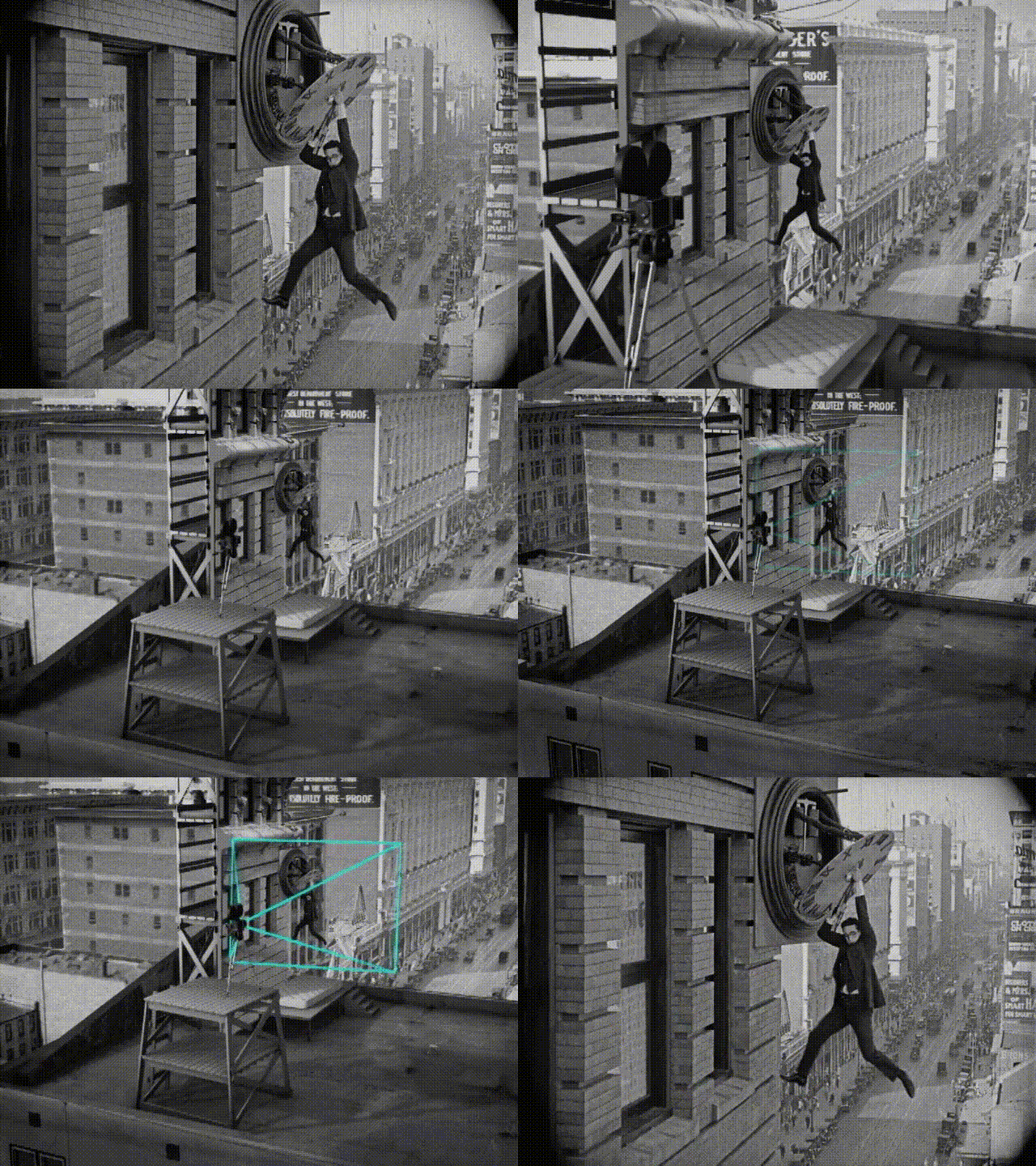
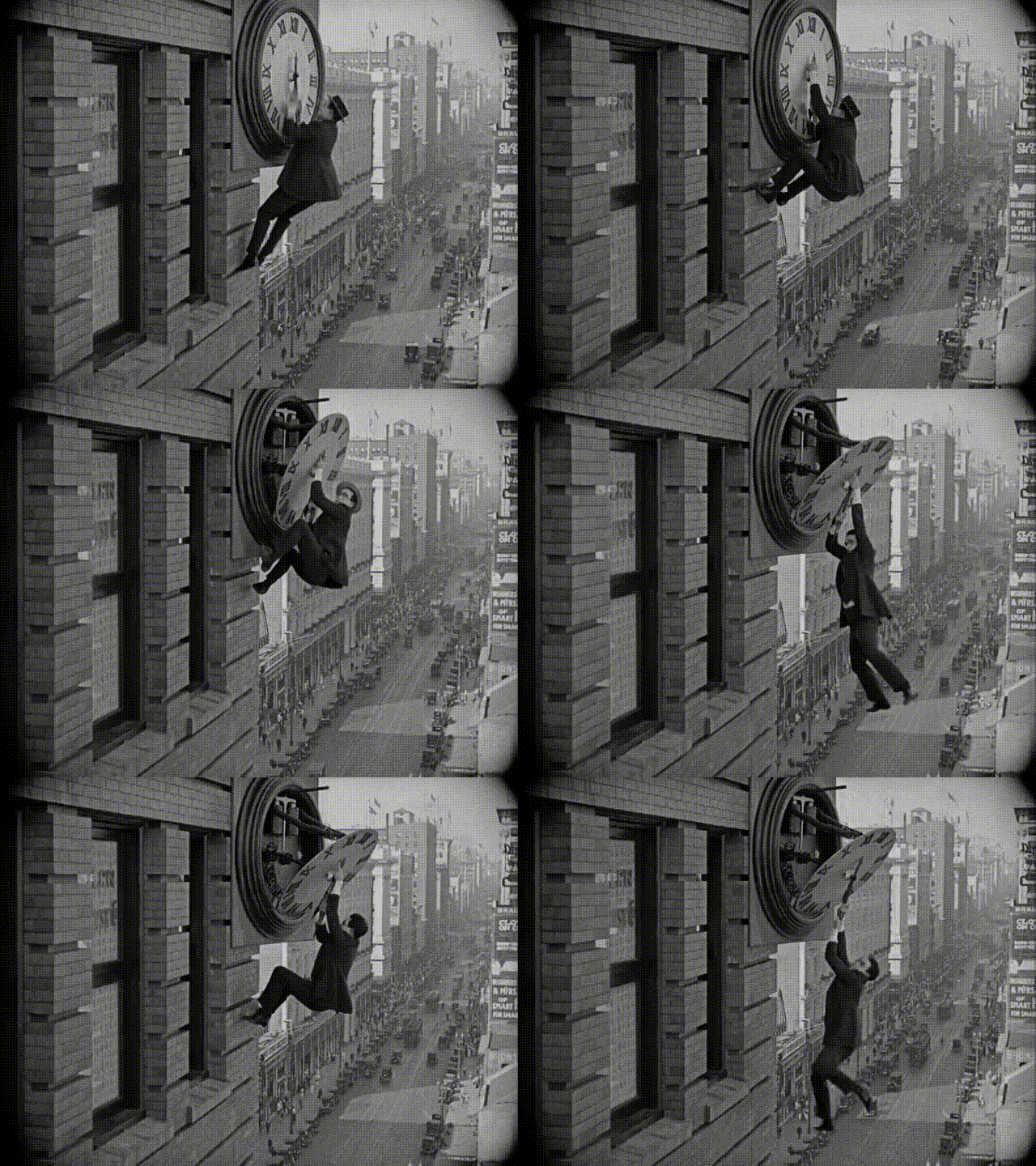
I bought this book on Harold Lloyd called “Master Comedian.” Harold was one of the top three comedians in the silent film era along with Charlie Chaplin and Buster Keaton. The book has such great stories of his life, his time in the movies and there are so many great pictures. The cover has a still of the famous clock scene, which I’m sure you have seen some time in your life.

I always read that Harold did his own stunts, there is another famous scene where the front facade of a house falls on him and he’s standing there and the windows go through his body, protecting him from the fall. (Correction – that was Buster Keaton). When I saw that the clock scene from the 1923 film, “Safety Last,” was “not real” in that he wasn’t hanging from a building as shown, that was only partially true, check it out here. He was hanging from a building, in Los Angeles, just not the way I had always thought. So this iconic scene that’s stuck in my head was sort of real and all done by Harold himself.

lloyd1lloyd2

lloyd3
This 1923 story from the Boston Post explains the stunt.

lloyd4Harold Lloyd was an excellent comedian and filmmaker. The book explains how he came up with gags for the films and explains what a great businessman he was.

Also, his famous 44-room estate, “Green Acres,” is a part of the book. The house is part of Hollywood legend. And his eye glasses, the book explains why he started wearing them, which ended up becoming his famous trademark.

Sounds from the past

When I was writing the previous post about things that will soon disappear, it reminded me of sounds that are gone. Ever think of that – things you don’t hear anymore? When was the last time you heard an old fashioned telephone ring or even the sound that a rotary dial makes? You can hear it on cell phones as a mock ring, but what about the real thing? What about a busy signal? You don’t hear them often if at all.

What about the ding of a typewriter, when did you last hear that? And think about a printed newspaper being read; the quiet crinkle of the pages. Almost a thing of that past. The sound of chalk on a blackboard is probably a thing of the past. And the ding of a cash register as it opens. What about the flapping sound that was made at the end of a reel of film on a projector – and the projector sound itself.

There is a museum of endangered sounds. It’s a website, where you click on the image of items and you hear them! The sound of AOL dial-up starting up brings chills to my spine, I don’t know why.  Sounds trigger memories like smell does.

One day I was lying out at the beach and every other minute it seemed that a plane flew overhead and I thought of what it might have been like years ago without that. Imagine the world 100 or more years ago. There was no sound of planes flying overhead or leaf blowers or lawn mowers or air conditioners or things like that. Life was peaceful, albeit it probably stank of horse manure every time you went out on the streets. But you would hear the sound of a babbling brook or horse shoes clopping on the ground or the wind blowing. There wasn’t much noise pollution 100 years ago.

Lunch atop a skyscraper


Amazing story about this famous photo taken of the construction workers high above New York City in 1932.

Kodak cameras

vivatar-110-camera-1985

I saw these old cameras online the other day, they brought back so many memories. I remember having a Vivitar camera like this and one like the Kodak below.

camera

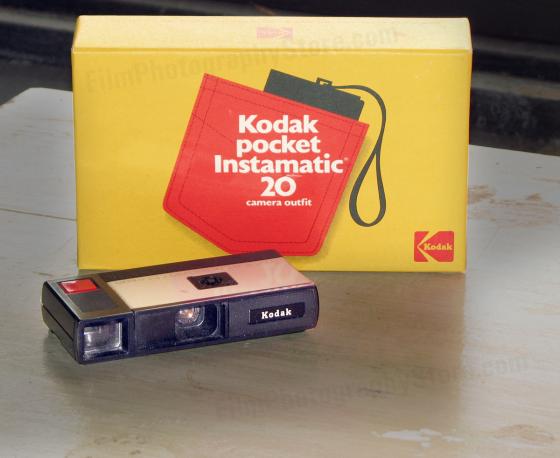
This Kodak pocket Instamatic brought me back, too. I remember getting this exact one for my birthday one year.

kodakpocketinstamatic20_cropweb

I remember how cool it was in the box just like this. It had that weird extender for the flash club, remember, there were four flashes on a square cube. And the film was a cassette. I wonder what happened to mine. Did we just throw it out? I have to check my old closet at my parents’ house one day, it’s got to be in there.

kodak

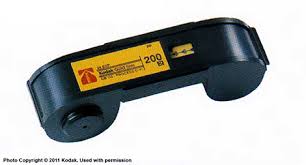
When I was older, maybe in my 20s, I worked for a department store, in the camera department for awhile. We sold tons of these little cassette films.

filmAnd we developed so many cassettes, too. A guy would pick them up the cassettes and then deliver the photographs in envelopes to the store.

Killing history

erasmushall
Erasmus Hall photo by Ramsay de Give for the NY Times.

There is a building in Brooklyn called Erasmus Hall, erected in 1787 with contributions from Alexander Hamilton, Aaron Burr, John Jay and Robert Livingston, it was the first secondary school in New York State and is considered a grand example of Georgian-Federal architecture and an ambitious vision of education.

It’s in danger of being destroyed. Story in NY Times here.

Recently, Admiral’s Row, also in Brooklyn, was torn down, this was a bunch of Civil War period houses built between 1864 and 1901 which stood on Flushing Avenue for all these years. See what’s left here.

Now with the the new gentrification of Brooklyn, they are killing history.

Rare films of the Old Masters

I forgot a lot of the times that so many of our great masters were alive 100 years ago or less. A French actor and director named Sacha Guitry took home movies in 1915 of some our greatest artists like Claude Monet, Edgar Degas, Auguste Rodin and Pierre-Auguste Renoir.

I have to laugh when seeing Monet, the coloring and the way his beard looks makes him look like he’s sticking his tongue out. The short film shows him painting in his garden in Giverny. Amazing.

Degas is shown in 1915 walking down a Paris street in a very short film, really just seconds, sort of snapping a quick pic of someone famous today as they walk by.

Rodin is shown on the street and also sculpting in his studio in 1915, two years before his death.

Renoir is filmed in 1919 at his home, smoking, a lot, and painting.

John Hall posted these on his YouTube page.

The Brooklyn Daily Eagle

I found this cool site, the Brooklyn Newsstand by the Brooklyn Public Library where you can see all of the Brooklyn Daily Eagle’s issues from 1841 through 1955. I was randomly reading something online and one thing lead to another and this site appeared.

I love reading old newspapers and this seems to be complete. The newspapers from the 1800s are a bit boring, as they are usually about four pages long with small type and boring stories, but as you go on from the 1900s and on, it gets quite interesting.

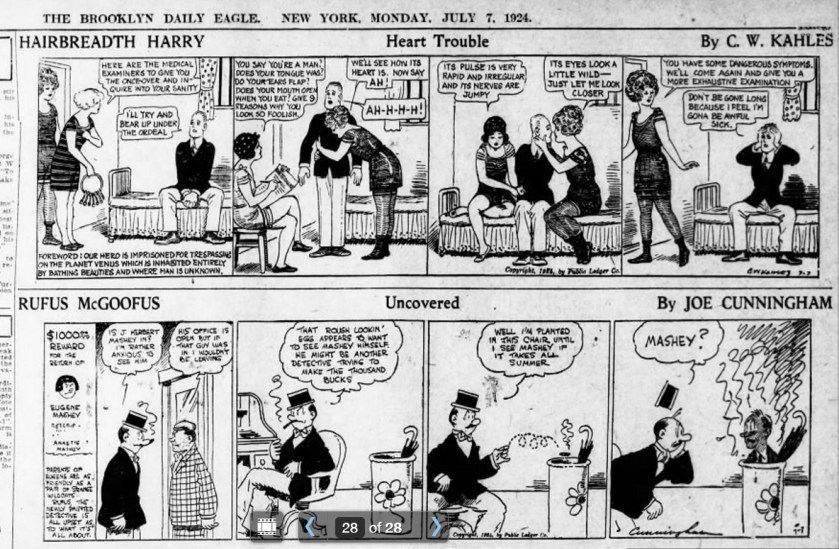
The first thing I always look for in old newspapers is the comics section and they had quite a few good comics from Mary Worth, Steve Roper to the Bumble Family.

You can look through some interesting old stories and advertisements. Look up any date and it’s there – the Titanic sinking, World War I and II, presidential races . . . whatever.

Of course there are many other sites with old newspapers, but for some reason, I don’t know why, I have always been fascinated by the Brooklyn Eagle. I read that it was once the largest daily afternoon newspaper in the country and perhaps I like it because I picture my parents and grandparents reading it during its heyday since their whole life was Brooklyn at that period. Sort of like the L train (I did a story on that here called “Ghosts of the L Train“).

The name Brooklyn Daily Eagle went into public domain and now is being used as a new digital version of the Eagle. You can see that here.

brooklyn-eagle1
Friday, July 5, 1946
brooklyn-eagle2
Tuesday, April 5, 1927
brooklyn-eagle3
Monday, July 7, 1924
brooklyn-eagle4
Saturday, June 8, 1935