
Remembering the 1970s

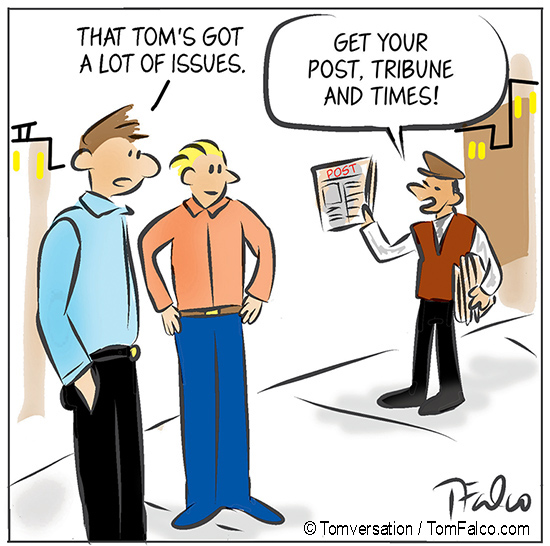
This cartoon ran last week and it got a lot of interest – from people who remember this and from those who think it’s an exaggeration.

Unfortunately, it was a thing – when we were kids, we had orange shag carpet all over the house. Our nextdoor neighbors had red. I can also remember houses having green. Weird.

And kitchens were harvest gold or green – green appliances, etc. We had harvest gold. The odd part is that our house was built from scratch and my parents chose the styles and colors – so that was what was chosen – that was the style.

The house was redone after Hurricane Andrew’s wrath in 1992 and it’s being renovated right now. My two brothers are contractors, and they are handling the job. I’ve seen photos and it seems like they knocked the whole inside of the house down – kitchens, bathrooms, walls, and so much more.

I haven’t been by, because I want to be surprised at the finished product. I’ve seen the work they do, so I know it will be a modern (for today) white kitchen, all open concept, with a large island in the middle, which of course will be old and haggard in 20 years and of course, out of style; but it will be the utmost in fashion today.

Welcome to the 1970s

The 1970s were a unique decade in terms of cultural, technological, and social change. Some things that were common then are either obsolete, outdated, or have evolved in some way.

Here are a few things from the ’70s that are no longer around or have been replaced along with brightly colored shag carpet:

8-Track Tapes

  • The 8-track was a popular way to listen to music on the go. They were large, clunky, and prone to malfunction, and they were eventually overtaken by cassettes and later, CDs and digital formats. I read recently that cassettes are making a comeback.

Wood Paneling in Homes

  • In the ’70s, wood paneling was a dominant feature in homes, especially in living rooms and basements. It was considered stylish at the time, but it quickly fell out of favor, giving way to lighter, more neutral colors and modern finishes.

Bell-Bottom Pants

  • These pants, which flared out from the knee downward, were a major fashion statement in the ’70s. Though they’ve had minor comebacks, they aren’t the mainstream trend they once were.

Polaroid Instant Cameras

  • While Polaroid cameras still exist, the instant cameras of the 1970s are far different. Today, we have digital cameras and smartphones with instant printing options that are more advanced, and Polaroid’s original models are now considered nostalgic.

Pong (and Early Arcade Games)

  • The first commercially successful video game, Pong, was released in the ’70s, and it set the stage for modern video games. But the original hardware and arcade game style have long been replaced by more advanced gaming systems and consoles.

Cigarette Ads on TV

  • Cigarette advertisements were common everywhere – on billboards, newspapers, magazine ads and so much more, so many ads ran on TV in the ’70s, but by the early 80s, health concerns and government regulations led to a ban on tobacco ads.

VHS Tapes (Early Video Tape Formats)

  • The VHS was a major home entertainment format, but digital media like DVDs, Blu-rays, and streaming have rendered it nearly obsolete.

Soda in Glass Bottles (Like Coca-Cola in CONTAINERS)

  • While glass bottles for soda still exist, they’ve largely been replaced by cans and plastic bottles, mainly because they’re easier to manufacture, transport, and store.

The CB Radio Craze

  • The CB (Citizens Band) radio was a big thing in the ’70s, especially among truckers, and it even sparked a pop culture moment with songs like “Convoy.” I remember one of my cousins had a CB radio in her car and so did her friends. I drove into the city one time with them and they were on the CB discussing the traffic on the upper level of the 59th street bridge in Manhattan with other CB radio enthusiasts who were stuck in traffic as well.

Some of these items are still fondly remembered in pop culture, while others are almost completely forgotten.

Subscribe to this Tomversation blog by clicking here – it’s free! This includes my weekly comics roundup on Fridays.

Abstract recipes

Cartoon via TomFalco.com


I don’t know why, but today’s Tomversation cartoon makes me laugh out loud. I mean I usually laugh at my cartoons, otherwise I wouldn’t create them, but for some reason, every time I look at this, I crack up.

I guess I am picturing a calm lady explaining to her friend that she goes mad when her recipes don’t turn our right and she throws them across the room onto the wall.

At first, it was going to say something like, “Oh, that – Frank doesn’t like some of my recipes.” But I didn’t want to bring violence into it, so I made her mocking her own creations.

It sort of looks like modern art that she is creating.

I have a friend, who needed to start making money, so he started creating modern art; you know, abstract stuff and he it sells for thousands of dollars now. He never did this before, he just used his imagination and came up with incredble stuff.

They are huge canvasas, I’m not even sure how he transports them to houses and condos where his work is sold and hung, but he does work sort of like Jackson Pollock, that sort of abstract stuff. It’s awesome.

The huge canvasas go perfectly in very large spaces in condos and houses. They really complete the decor.

Receive an email each time I publish this Tomversation blog
by clicking here

Steal like an artist!

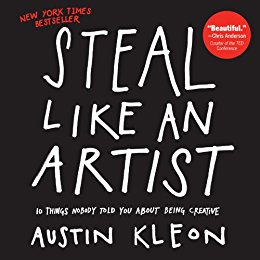
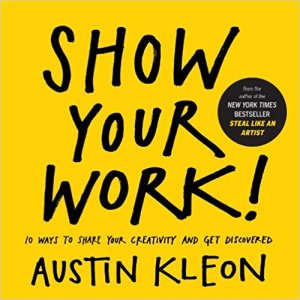
book2I read these two books by Austin Kleon “Steal Like an Artist” and “Show Your Work!”  Austin is a writer and artist who lives in Austin, TX. Yes, Austin lives in Austin. I’m still looking for a town named Tom to move to. I know of a Tomball, Texas. I’ve been called Tombo and Tomo, never Tomball though.

They are both quick reads, one book took about half an hour to read, the other about an hour. “Steal like an Artist” basically says that there are no original ideas – everyone steals from each other. Truth be told, I have a couple of comic strips that I like, mostly the drawing styles, and I try to emulate them while designing and creating my new comic strip. I didn’t look at is as stealing, I see it more like inspiration.

In the book, Austin says, “”First you figure out what’s worth stealing, then you move on to the next thing. That’s about all there is to it.”

But isn’t Lana Del Rey having this issue with Radiohead and the “Creep” song? One of my favorites by Radiohead. Lana is being sued by Radiohead for similarities in Lana’s “Get Free” song.

Anyway, I love the Steal book, it has a lot of useful information for artists and creative people. William Ralph Inge said, “What is originality? Undetected plagiarism.”

I’m not for this plagiarism, I am more about getting ideas and studying those who inspire you.

book1The second book, “Show Your Work!” is all about that – sharing your work – not just the completed piece, but show how it is created, show your concept along the way. Don’t be stingy, reach out to your fans – interact. There’s a lot in the book about social media and how it influences people and puts people together. Austin is keen on Twitter Meetups, I didn’t know that was  thing anymore, but I do remember going to a few in the early days.

Austin says that a good idea is to immerse yourself into someone or that inspires you. If it is an artist, learn about them, learn everything. Then find three people that this person loved and learn about them, and so on and so on. I love this idea.

The book gives quite  lot of good info on how to get your work out there and how to interact with people and fans who will move you along your way and up the ladder to success. But the object is not to dwell on money or success, that will come with time if you Show Your Work!

Loving this cartoonist roundtable

roundtable
From left: Tom Heintjes, Brian Walker, Greg Walker, Jeff Keane, Mason Mastroianni. Photo courtesy of Hogan’s Alley.

I read a really great interview in Hogan’s Alley, where editor Tom Heintjes sat down with some famous cartoonists,who took over the family business from their fathers and grandfathers. Jeff Keane of Family Circus, Mason Mastroianni of B.C. and Brian and Greg Walker who are Mort Walker’s sons, who work primarily on Beetle Bailey and Hi and Lois sat around a table and talked.

They bring up the dynasty aspect of cartooning, something that has always bothered me. When a cartoonist dies, should the strip continue? Did it run its course?

Greg Walker says, “We’ve got to do quality work, or papers will drop us like crazy. We did come in with a nice list, but there’s the pressure to maintain it.”

I never really thought of that. It has a leg up being a popular strip with lots of newspaper subscribers but as one of them said in the interview, “When you’re at the top, there is only one way to go.” But on the other hand, newspapers are loath to drop a comic because losing just one subscriber over that is not acceptable, so I do think that some of these older strips just stay there year after year because the newspapers don’t want to make waves by dropping them, even if it’s only a handful of people who read a particular strip.

They all agreed that the older strips mixed with the newer strips make up a complete comics page and there is something for everyone that way. I’ve always agreed with that, I just felt that the older strips should be the original older strips, not an extension by the second, third and sometimes fourth generation of artists. And don’t get me started on those who buy gags. To me a cartoonist writes the strips and draws the strips, sometimes along with someone else, but purchasing gags just makes the cartoonist an artist, not a cartoonist.

Brian Walker says of his dad Mort Walker: “My father has been asked millions of times why he doesn’t retire, and he says, ‘Why should I retire? I’ve got millions of readers who enjoy my strip!’ Why should he retire just because he’s getting old? When he started out, in 1950, he was competing against Pogo, Li’l Abner, Dick Tracy, Little Orphan Annie. None of those guys quit to make room for him — he scratched and clawed for every one of those 1,800 papers.”

The roundtable interview is here. It’s really good.